

When you register at an online casino, more specifically a legal one, you should expect the company that runs the casino to verify if you are actually eligible to play. It may be a matter of checking if you’re from a country that is among the list of accepted jurisdictions, but the most important set of checks wants to know who you are and where your playing money comes from.
The thing with such verifications is that they need to happen in a timely, efficient, convenient, and, most importantly, one could argue, safe fashion. It’s sensitive data that must not float around in insecure channels, which is why these protocols use encrypted communication.
In this article, we will discuss much of the sequence that you’ll likely interact with when you go through the verification protocols at online casinos. However, keep in mind that various differences imposed by regulatory requirements can change how reality is in your particular country.
Why do you need to verify your identity, in short?
To verify your identity at online casinos, you will need to prove that you are of legal gambling age. This entails letting the casino know who you are, which it can then use as a way of confirming that the age that you stated is the real one.
Financial verification is another thing that the casino may want to verify. For example, the UKGC’s verification guidelines add this factor because you need to prove that the money that you use for gambling is your own, so the payment method needs to be in your name.
Another thing is what the actual minimum age is in your case. If you need to be at least 18 or 21 (as in US States like New Jersey’s gambling legislation), then such verification proves that you meet this legal threshold.
Other than age verification, identity verification that uses your personal information allows casino operators to match it, including your IP (if you don’t change it), to determine whether you are a self-excluded player who is trying to circumvent said exclusion.
As for money laundering and fraud, careful controls that include your payment method are another way to track whether the money you use to fund your account is actually legitimate funds rather than ill-gotten gains.
The type of documents and proof you’ll need to provide
Not all verification protocols need documentation per se. Some use national databases to match the data you provided during the registration process, which would clarify whether you are eligible to play and are not a member already, let alone someone barred from playing because of something like self-exclusion.
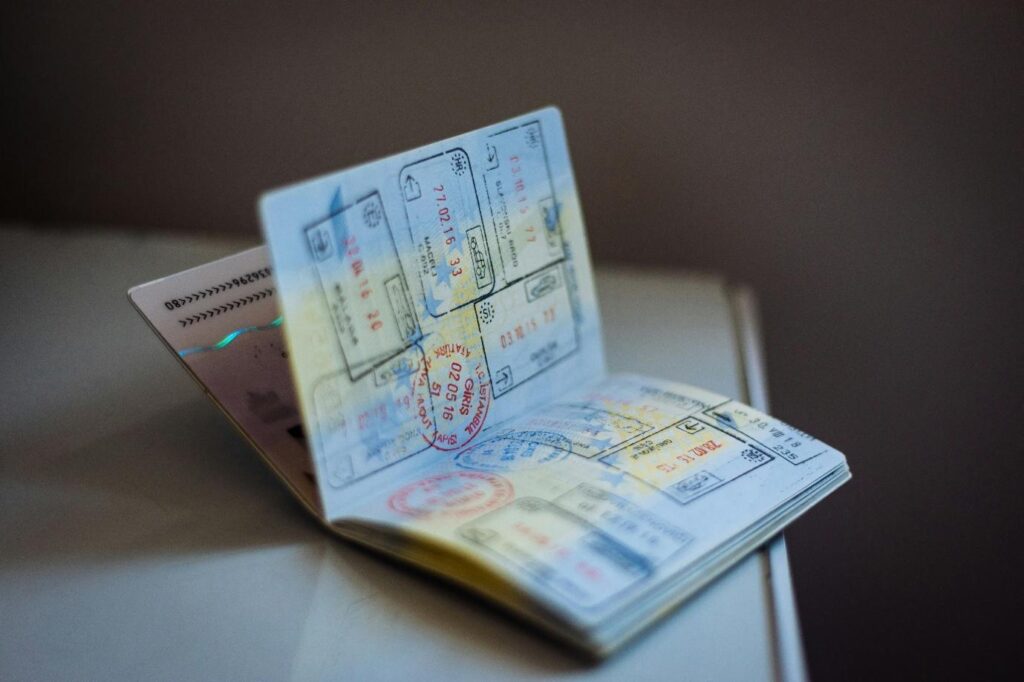
Other markets and casino operators will require documents as a way to verify whether the data you provided is real. These are cases when the casinos do not have access to the aforementioned databases, or if they want to be sure that that’s who they are dealing with.
Some examples of national/state-level requirements include Romania, where the national ID includes the data required by the registration form from ONJN-licensed casinos, and Pennsylvania, which requires its operators to record the government-issued ID.
Regardless of variation in method, these are not all the parts of a modern KYC (know your customer) protocol that you see in casino verification methods. The selfie or short recording of your face moving is something that needs to prove that you are the one appearing in the documentation photo.
What does a secure verification process look like?
A secure verification process means that your data is safe when you send it to the operator via encrypted channels, which must be within your official casino account. Once the operator has this data, it must be sure that it’s accurate information that, if possible, it can verify via government or banking databases.
While a jurisdiction like New Jersey, where first name abbreviations may pass during verification, the UKGC wants its licensees to require accurate data from the moment the user registers. As such, any verification, such as a subsequent one, would have the exact data that would allow a direct and seamless match. That’s why the first step would be a correct completion of the sign-up form.
If you have to provide official documentation as a user, you’ll have to take clear pictures of the required credentials. This includes a banking card if that’s the payment method you’ve picked, with the caveat that you must never provide your security code. You’ll generally find a certain section in your account portal where you’ll have the safe channel to use for this action.
Is there a requirement to show any proof before depositing?
Proof of age and/or identity depends very strongly on the jurisdiction and regulatory requirements that you’re dealing with. If you’re playing in a strict market, you’ll most likely need to verify your account before depositing. If the regulations are more relaxed, this verification may pop up when you’re trying to withdraw.
Before any money gets into your account as a player at a UKGC-licensed casino, you must verify your identity. If those funds lead to gambling activity, you must prove that you are eligible to gamble.
In New Jersey, the situation is the same, but the mechanism entails the idea of you offering your consent for the casino to confirm your age and identity. This means that it’s also a process that happens before a deposit.
So you may ask what happens if you can play without actually depositing. If you look at the current options from the popular market of 20 no deposit spin packages, there is a mix. Some operators with lenient regulators may simply pivot toward asking for proof of identity and age if you try to cash out, while others make KYC a prerequisite for getting the bonus.
Will you always have to verify your identity to withdraw?
You have to verify your identity at withdrawal if you haven’t already, or if you request the payout of a large sum. If the casino already knows your information and spots no foul play, it should send you the sum right away.
Some casinos may need to conduct a brief verification process because anti-money-laundering legal requirements mandate it.
If not, a triggered verification may be the result of requirements regarding the amount that you deposited (i.e., you have put a lot of money into your casino account), or if the sum you are trying to withdraw is large.
The answer is that you don’t have to verify your identity every time you withdraw if you went through this process already, but some details regarding your payments may require it.
Conclusion: A short timetable

In the interest of a summarizing finale, you need to know that your name, birthday, address, and a portion of your SSN as a US citizen are part of the registration form, which should take a few minutes.
Then, you need to go through the KYC process before you deposit or redeem a deposit (both applicable at tightly regulated casinos). Automated processes, whether they require documentation or not, shouldn’t take more than a few hours, but some casinos may have timeframes that exceed 24 hours, especially if they have no direct link with official databases.
If you were able to deposit and play without verifying your identity, then expect to have to complete it before receiving payout approval.
Remember that online casino gambling can be addictive, and only play if you’re at least the minimum gambling age in your country.