
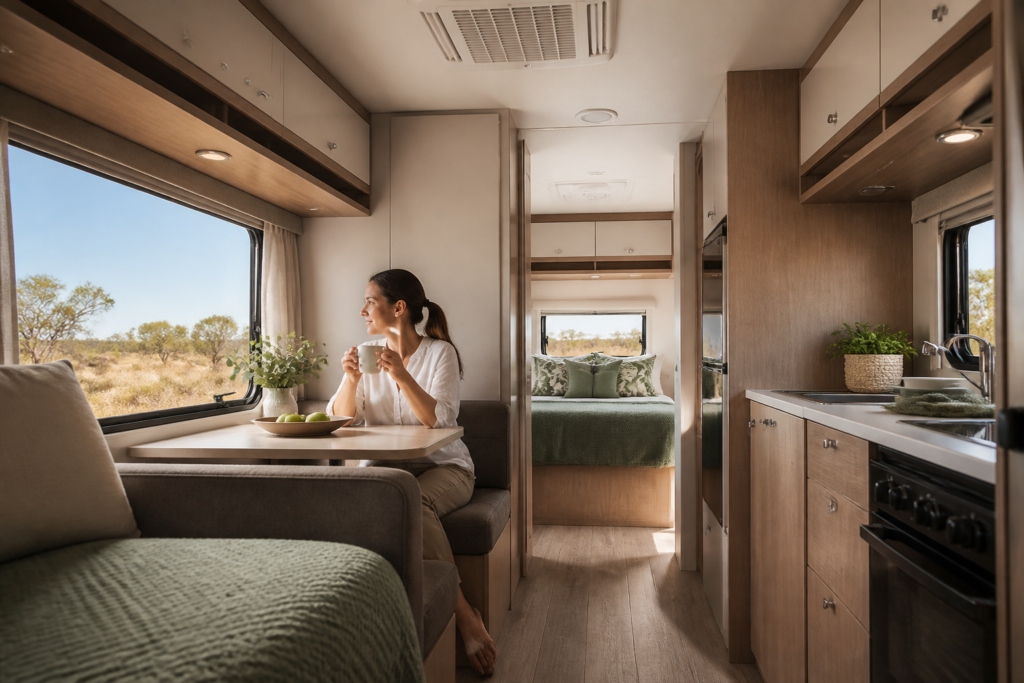
Even with an air conditioner running flat out, many Australian caravan owners find themselves sweltering on summer road trips. The van feels stuffy by mid-morning, the AC struggles to keep up, and by the time they reach camp everyone is miserable. It does not have to be that way.
Real comfort on long hauls across Australia is not about blasting cold air until the compressor gives up. It is about managing heat gain before it builds, using airflow intelligently, running the AC at a realistic setting, and making a handful of small lifestyle adjustments. These caravan road trip comfort tips are practical, sequential and grounded in the actual conditions you will face, from coastal parks to the outback. Where the job calls for more than owner-level checks, there is clear guidance on when to call in expert help and where to find AC maintenance support and parts before you leave.
Why Australian caravans get so hot — and what comfort really means
Australia’s sun is intense at the best of times, and a stationary caravan soaks it up from every angle. The roof and walls absorb radiant heat and transfer it inward, bitumen sites and exposed gravel reflect additional warmth back up from below, and the relatively small internal volume means air temperature rises fast. Large windows compound the problem, acting like greenhouse glass on whichever side faces the afternoon sun. Even caravans with decent insulation still have weak points: single-skin doors, thin standard blinds, roof vents without covers, and gaps around cable entry points all let heat leak in steadily.
Comfort is more than air temperature. It is the combination of how warm the air feels, how humid it is, whether there is any movement across your skin, and whether the surfaces you sit or sleep on feel clammy or scorching. Aiming for an icy interior when the thermometer outside reads 40 °C places enormous stress on the AC, burns power at an unsustainable rate, and often still leaves people uncomfortable because the surfaces, bedding and humidity inside have not caught up. A more achievable and genuinely pleasant target is a modest temperature drop — keeping the van 8 to 10 degrees cooler than outside — combined with good shade, moving air and dry surfaces. That combination feels far better than cold air alone.
Block the heat before it gets in: shade, orientation and simple insulation
The most effective cooling strategy costs nothing: choose your site carefully. Where possible, park under trees with enough clearance for the roof, alongside a building that shields the western side, or behind any natural feature that blocks the afternoon sun. The western side of the van is where the harshest heat arrives in the last few hours before sunset, so protecting that wall makes the biggest single difference to overnight temperature.
Orientation matters too. If you have a choice, position the smallest wall or the most insulated side of the van facing the worst of the sun, and keep main windows and the door in the shade. Setting up an awning along the sunny side is the next step; peg it low enough to cut off low afternoon sun, but leave a gap at ground level so air can still flow underneath. Annex walls along that same side block radiant heat from the van’s skin even further.
Inside, fit reflective windscreen and window covers on whichever panes face the sun. Insulating internal blinds or curtains make a noticeable difference, and a simple draft stopper along the base of the door seals off hot air that would otherwise creep in around the seal. For vans that regularly travel in very hot regions, a reflective roof coating or additional roof insulation, fitted by a professional, is a worthwhile longer-term upgrade that pays back on every summer trip that follows.
Use airflow and ventilation wisely to keep your caravan feeling fresh
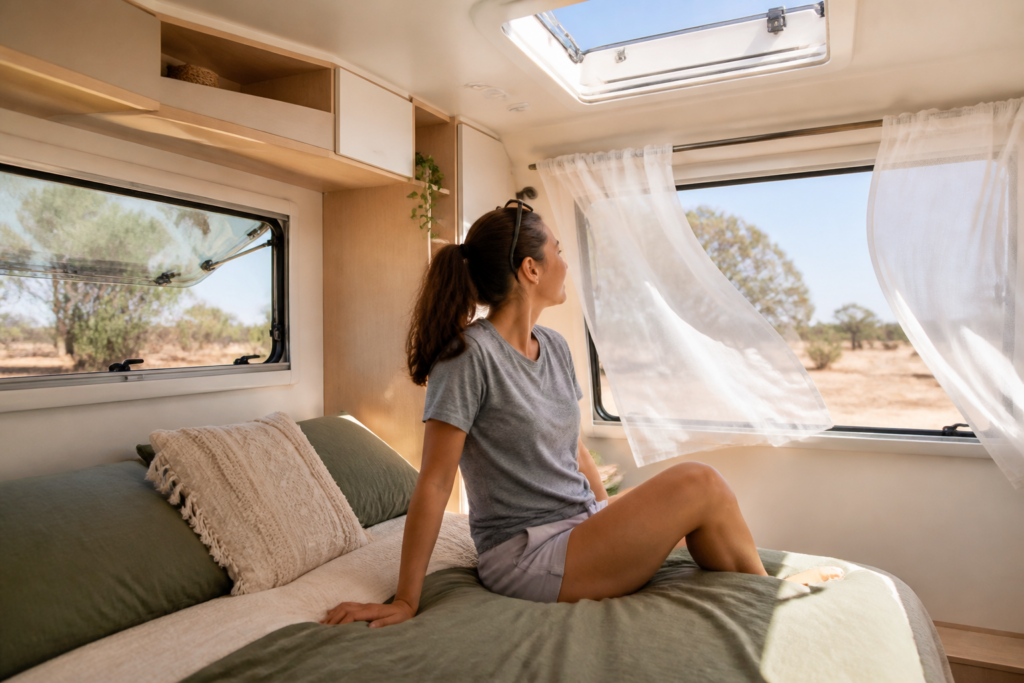
A cross-breeze is the simplest and cheapest form of cooling available. Open windows or hatches on the shaded, windward side of the van, then open a smaller gap on the opposite side so air is drawn through rather than just pooling. The windward opening does the pushing; the smaller leeward gap does the pulling. Without both, air simply stagnates.
Roof vents and hatches let rising hot air escape, which is their main job. Crack them open with insect screens in place whenever the outside air is cooler than inside, typically from late afternoon through to mid-morning the following day. A low-wattage 12-volt fan placed at floor level pushes cooler air up through the van and keeps it moving across beds and seating, making the effective temperature feel several degrees lower without drawing much from the battery.
The most useful daily rhythm in hot conditions is this: open up fully in the evening and early morning to flush accumulated heat, then close windows, pull down reflective blinds and shut roof hatches before outside temperatures peak, usually by mid-morning in summer. In dusty outback areas, balance this against air quality. Keeping a small window open on the windward side with a good flyscreen is usually enough to maintain airflow without filling the van with red dust.
Use airflow and ventilation wisely to keep your caravan feeling fresh
Get the best from your caravan air conditioner on long trips
The single most common mistake with caravan AC is setting the thermostat far too low. A target of around 24 to 26 °C is realistic, comfortable in a well-shaded van, and far kinder to the compressor than demanding 18 °C in 40-degree heat. A realistic target also means the unit reaches it, holds it and cycles off, rather than running continuously without ever achieving the set point.
Power management is the other major variable. At a caravan park, check the amperage of the outlet before you connect, because running the AC alongside a kettle, toaster or microwave on a 10-amp site will trip the breaker. Off-grid, be honest about what your battery bank, inverter and generator can sustain; the AC should run in short bursts during the hottest part of the day rather than continuously draining a system that cannot keep up.
Before any long summer run, carry out the owner-level checks that genuinely matter: clean or replace the AC filters as per the manufacturer’s manual, since blocked filters are the most common cause of poor performance; clear dust and spider webs from the exterior grills; and inspect the power lead and plug for any damage or corrosion at the pins. These take fifteen minutes and can prevent a miserable breakdown in the middle of nowhere.
Know the warning signs that mean the unit needs professional attention before you leave: unusual noises or smells during operation, breakers tripping repeatedly, cooling performance noticeably worse than it used to be, ice forming on the coils, or water dripping inside the van. None of these fix themselves on the road. Gas work and opening sealed refrigerant components must be handled by a qualified technician, so do not attempt these yourself. RV Parts Express offers a detailed guide to maintaining your caravan air conditioner, a parts catalogue covering filters, remotes and common components, and expert advice on servicing intervals. If you are not confident about your system’s health before a big summer trip, checking their resource before you leave can clarify exactly what you can do yourself and what needs a technician.
Small upgrades and habits that transform how heat feels inside the van
Bedding is one of the most underrated comfort factors in a hot caravan. Swap heavy doonas for a light cotton or bamboo sheet and a single breathable quilt. Many caravan mattresses have a plastic or foam-topped surface that traps heat against your body; a breathable mattress topper fixes this almost immediately and makes a warm night feel manageable rather than unbearable.
During the day, choose loose, light clothing and use a thin throw to avoid sitting directly on vinyl or synthetic upholstery, which becomes sticky within minutes in the heat. Switching any remaining halogen or incandescent light fittings to LEDs is a small upgrade with a double benefit: LEDs produce a fraction of the waste heat and use far less power, which matters when the AC is already putting strain on the system.
Cooking inside a caravan on a hot day is one of the quickest ways to make life miserable, so use a BBQ or portable cooker outside whenever the temperature is up, and keep inside cooking to the rangehood running at full speed with roof vents open to clear steam quickly. Finally, stay genuinely hydrated: fill a two-litre bottle each morning and sip steadily through the day rather than relying on coffee or cold drinks from the fridge. Plan any heavy lifting, setting up the van or exploring sites, for the early morning or evening, and rest properly during the peak heat of the day. These habits cost nothing and make the whole experience substantially more comfortable.
A pre-trip cooling checklist and where to get AC support
Before you leave, run through these steps: confirm the awning and any annex walls are in good working order; fit reflective screens to the main windows and have insulating blinds ready to deploy; test all fans and roof vents to ensure they open, close and seal properly; then plug into mains power and run the AC for a full thirty minutes to confirm it starts cleanly, reaches temperature and drains condensate correctly. Any problems found at home are a minor inconvenience; the same problems found two hours out of town on a 40-degree day are a serious one.
Pack spare AC filters matched to your specific unit, a soft fan for sleeping areas, breathable bedding, and a roll of draft-sealing tape to fix any obvious hot spots around doors or cable entry points. These weigh almost nothing and cover the most common comfort failures on the road.
For deeper technical guidance, covering servicing intervals, compatible replacement units, filters, remotes and other spare parts, the RV Parts Express caravan air-conditioning resource is the right place to look before you head out. Having the right parts on board means that a minor AC issue stays minor.
The bigger takeaway is this: shade, airflow and sensible AC use work together as a system, each doing what the others cannot. Good shade reduces how hard the AC needs to work; smart ventilation removes heat that shade alone cannot stop; and a well-maintained, realistically set air conditioner handles what remains. Used together, they keep a caravan noticeably cooler and genuinely liveable across Australian conditions, without burning out the unit or the people inside it.