
Want to squeeze more adventure out of every single trip?
Many people plan one activity for their holiday and that’s it. Glacier hike. Whale watching tour. Perhaps a day skiing.
Here’s the problem:
You traveled all that distance, booked the flights, hotel and rental car… then you only did one thing.
Smart travellers do it another way. They bundle their adventures. Travellers today participate in an average of four activities, up from 3.5 activities just a few years prior.
More experiences. Same trip. No extra flights.
Here’s how to plan a multi-adventure trip that actually works (yes, even in winter).
Let’s jump in!
Inside This Guide:
- Why Pairing Adventures Makes Sense
- Planning Around Daylight Hours In Winter Travel
- 5 Adventure Pairings That Work Well Together
- How To Build Your Multi-Adventure Itinerary
Why Pairing Adventures Makes Sense
Pairing adventures means planning multiple outdoor adventures that logically go together in the same trip. Normally they are near each other geographically.
Imagine hiking in the morning and relaxing in hot springs in the afternoon. Snowshoeing during the day, then hunting for northern lights after dark.
It’s not just about doing more. It’s about doing it smarter. Strategically combining activities will allow you to:
- Save money: One set of flights and one base camp covers several experiences.
- Save time: Less driving between spots means more time outside.
- Enjoy a fuller experience: With something different every day, you won’t run out of things to do.
Pretty cool, right?
Planning Around Daylight Hours In Winter Travel
This is where most people get it wrong…
How much daylight you have during your winter travel day can really affect your experience. Up in the extreme north, there isn’t much sun to speak of. Iceland illustrates this point perfectly. In December, Reykjavik sees only 4 to 5 hours of daylight, with sunrise at around 11am and sunset around 3:30pm.
That changes everything.
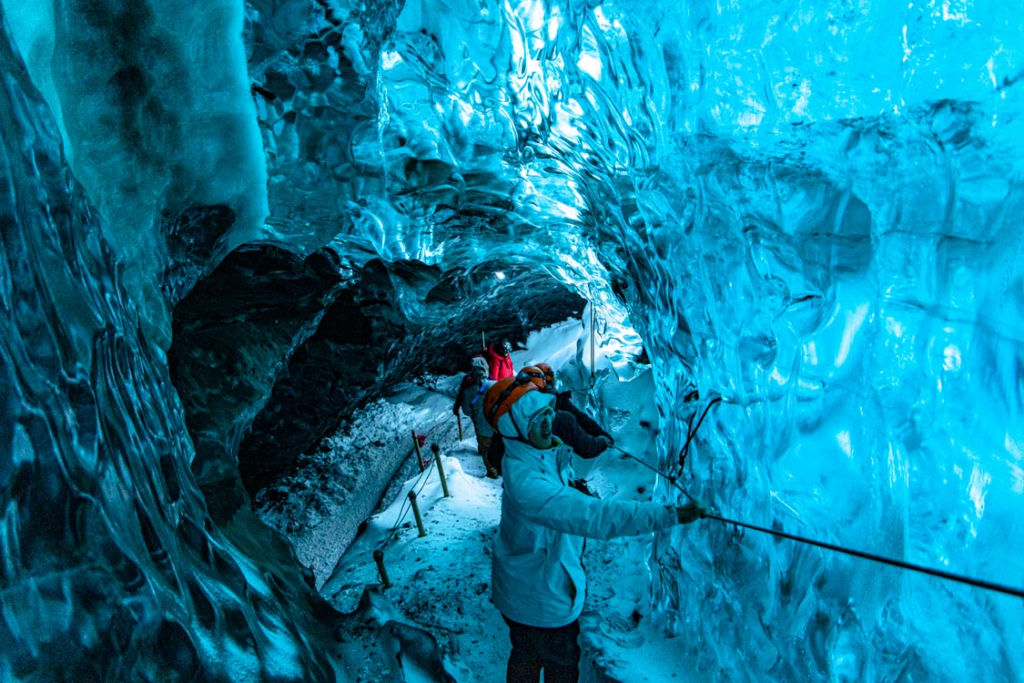
Planning around the best time to see Iceland’s ice caves is a great example. Ice caves only exist during the freezing months. This means your tour is smack dab in the middle of the shortest days of the year. You want thick frozen ice AND enough winter sunlight to enjoy your tour and drive safely back and forth.
You cannot cram three daylight activities into one short winter day. There simply aren’t enough daylight hours to accommodate them all.
So you need to split your day into two halves.
Here’s the simple rule:
- Light hours: Glacier hikes, ice caves, waterfalls, long drives
- Dark hours: Northern lights, hot springs, stargazing, local food
Plan this way and you’ll never waste a single minute of precious winter light.
5 Adventure Pairings That Work Well Together
Some activities don’t mix. Some conflict with each other because they need to be done at the same time of day. Others require completely different equipment, which means more luggage to haul around.
Here are 5x pairings that fit together nicely.
Glacier Hiking + Hot Springs
This is the classic winter combo.
You spend the morning lacing up crampons. Crunch crunch. Across fields of blue ice. Your legs are weary. Your face feels frozen. Then you sink into a hot spring. Steam rises, and the sky turns black.
It’s the perfect mix of hard work and reward.
Snowshoeing + Northern Lights
Snowshoeing requires little skill and works everywhere it snows. Snowshoe to your spot during daylight hours, grab a hot dinner, then head back out after dark to scan for the aurora.
Same warm clothes. Same location. Two totally different experiences.
Sea Kayaking + Coastal Hiking
This one is best saved for summer.
Kayak along the shoreline in the serene morning waters. Then exit the kayak and hike along the cliffs overlooking it. You experience the same shoreline, but from two very different perspectives.
Mountain Biking + Wild Swimming
Hot, dusty trails followed by a cold lake swim? That’s a winning combo.
Search for mountain bike parks/trail systems near rivers/lakes. Many mountain towns have access to both and you can ride right up to the shore.
Wildlife Safari + Stargazing
Animals come alive at sunrise and sunset. Which means your nights will be reserved for… something else.
Light pollution is rare in remote safari areas. So the night sky is spectacular. Reserve a lodge room with an open deck and you have VIP access to the Milky Way.
How To Build Your Multi-Adventure Itinerary
So you know what activities go together. But how do you structure them into a cohesive journey?
It’s easier than you think.
Pick One Base
Pick a town/lodge near all your activities. Hotel hopping daily wastes time and energy.
One base = more time outside.
Map Your Daylight
Know what time the sun rises and sets where you will be traveling before you make any reservations. This should be common sense, but is particularly important during winter months. Plan your daytime pursuits for when it will be brightest, and schedule evening activities for nighttime.
Pair Hard With Easy
Don’t book two tough activities on the same day. Your body won’t thank you.
Balance a strenuous glacier hike with a leisurely soak. Follow a long bike ride with an easy sunset paddle. You’ll have energy for the entire vacation, not just days one and two.
Leave A Buffer Day
Weather happens. Especially in places like Iceland, Norway and Canada.
A buffer day allows you to reschedule a missed tour instead of forfeiting it altogether. Weather permitting? Spend the extra day discovering a new activity or relaxing.
The Final Word
Coupling adventures is one of the best ways to get more out of every trip. You will save money and time, and return with far more stories.
Plus, you’re not the only one craving adventure. Demand for trekking and mountaineering trips soared 69% from 2025 to 2026, according to travel insurance data. Searches on Pinterest for adventure tourism surged 75%.
People want trips that push them.
To quickly recap:
- Pick activities that suit the same region and the same gear
- Plan around daylight hours, especially for winter travel
- Split your days into “light” and “dark” activities
- Pair hard days with easy recovery
- Always leave a buffer day for bad weather
The greatest trips aren’t about one big highlight. They are many awesome experiences seamlessly connected.
So start planning… and make your next trip count twice.